Planning
Crocodylians
- 日程
- 2025年11月26日
- 対象
- 会場
- Japan Gallery 1F "Exhibition hall"
- 受付
- 記録

Crocodylians and their relatives have lived on the water's edge in the same form for millions of years. Even among reptiles, Crocodylians are unique. This exhibition introduces Crocodylians in their various forms from around the world and their ecology,
using taxidermy, skeletal, and other specimens, videos, and old drawings, highlighting the history of human and Crocodylians. Considering how these "waterside neighbors" have coexisted with humans for such a long time can help us understand the
relationship between people and wild animals in the future.
Exhibition
| Title | Special Exhibition “Crocodylians” |
| Period | November 26, 2025 to March 1, 2026 |
| Venue | Japan Gallery 1F Exhibition Hall for planed exhibition and Central Hall |
| Hours | 9:00-17:00
*Opening days, hours etc. are subject to alteration. Please check the website before your visit. |
| Closed | Monday (Except January 12, February 16, 23, 2026)
December 28(Sun),2025~January 1(Thu), 2026, January 13(Tue) and February 24(Tue), 2026 |
| Organizers | National Museum of Nature and Science |
| Special Cooperation | ATAGAWA TROPICAL & ALLIGATOR GARDEN |
What to see
Chapter 0: Studying Crocodylians
Researchers have studied them from various angles―morphology, ecology, and evolutionary history. By studying living crocodylians, we can obtain clues to what ancient, extinct crocodiles and other large reptiles once looked like and how they lived. The
basis of such studies is the specimens preserved in museums. At the National Museum of Nature and Science, crocodylians that had been kept and died in zoos and other facilities have been collected and preserved as specimens and used in various studies.
In addition, surveys on wild individuals, carried out close to danger, are essential to understand their true nature. This section introduces the forefront of crocodylian research.
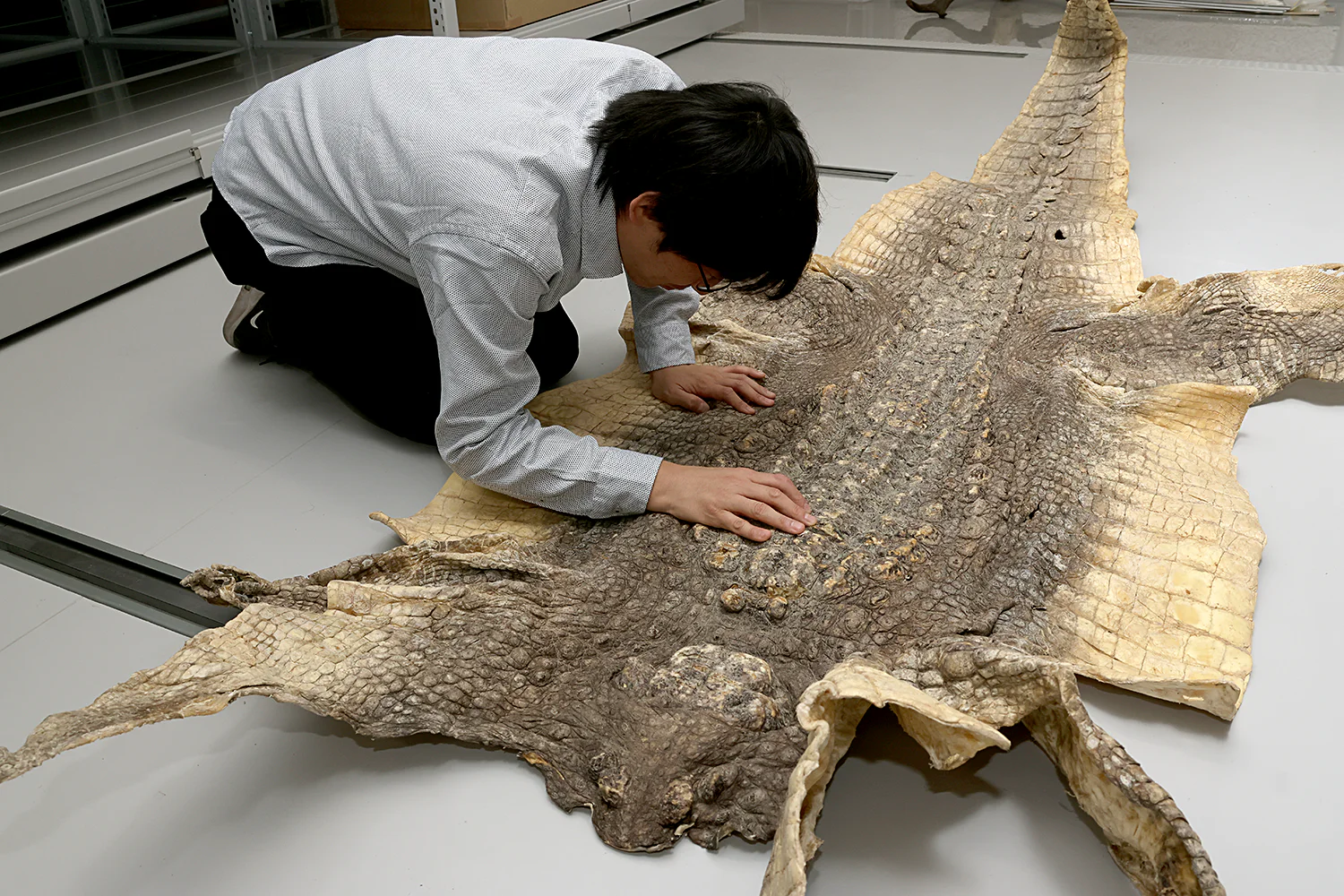 a researcher examining a skin specimen
Chapter 1: The History and diversity of Crocodylians
Crocodylia first appeared in the Late Cretaceous Epoch as predators on the water's edge. They survived the mass extinction event that killed off non-avian dinosaurs and spread across the world. Among the extant reptiles, crocodylians compose a relatively
small group, consisting of 27 species in 3 families. However, they come in various forms and have a powerful presence in the local ecosystems. Recent genetic studies have led to a greater understanding of their previously unknown taxonomic diversity and
evolutionary history. This chapter traces the history of crocodylians from around the world that are full of unique characteristics.
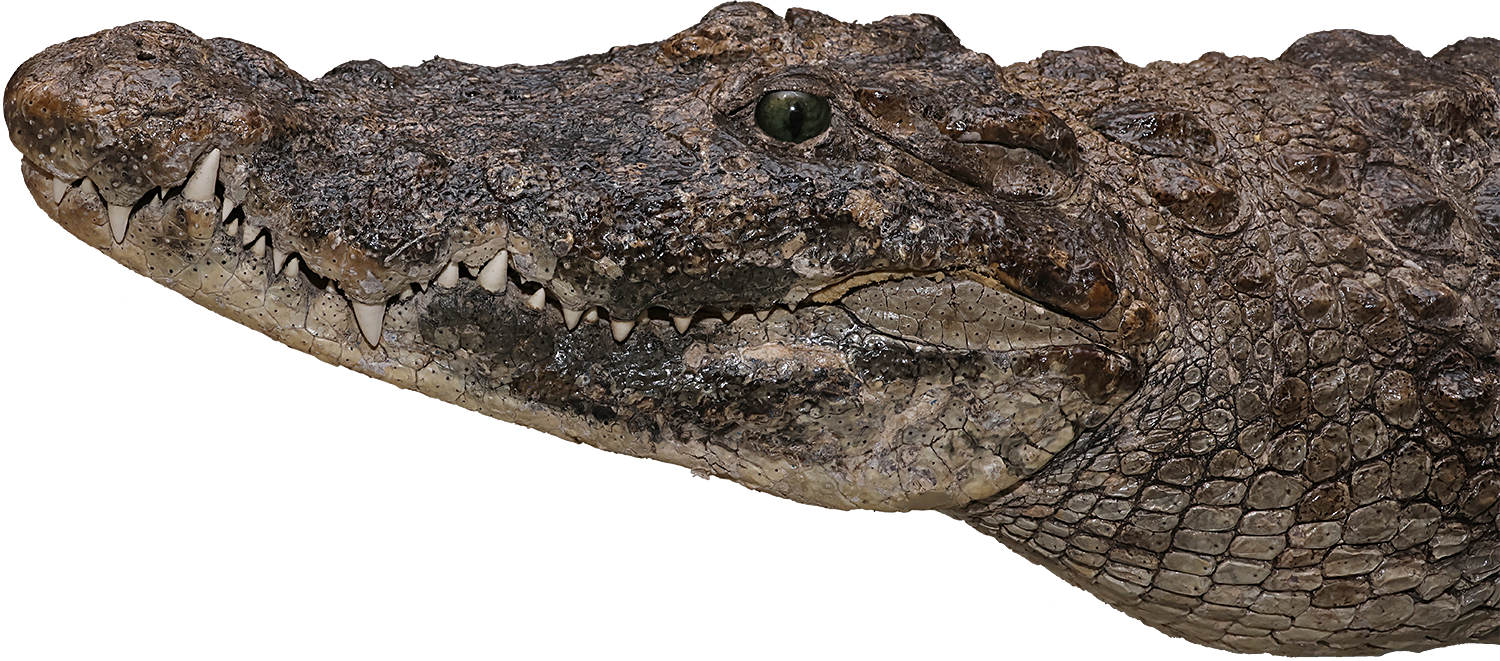 Taxidermy of West african crocodile (National Museum of Nature and Science)
 Taxidermy of False gharial (National Museum of Nature and Science)
Chapter 2: Crocodylians as living animals
Living groups of crocodylians, which have survived since the Mesozoic, are reptiles that have adapted to the waterside environment. They range in total length from less than 2 meters to greater than 6 meters, although all share specialized characteristics
for hunting in water, such as hard scales, strong and flexible body, and sharp and pointed teeth. They also display social behavior such as child-rearing and territoriality. This chapter focuses on the amazing body plan and life of living crocodylians
and unravels their evolutionary history.
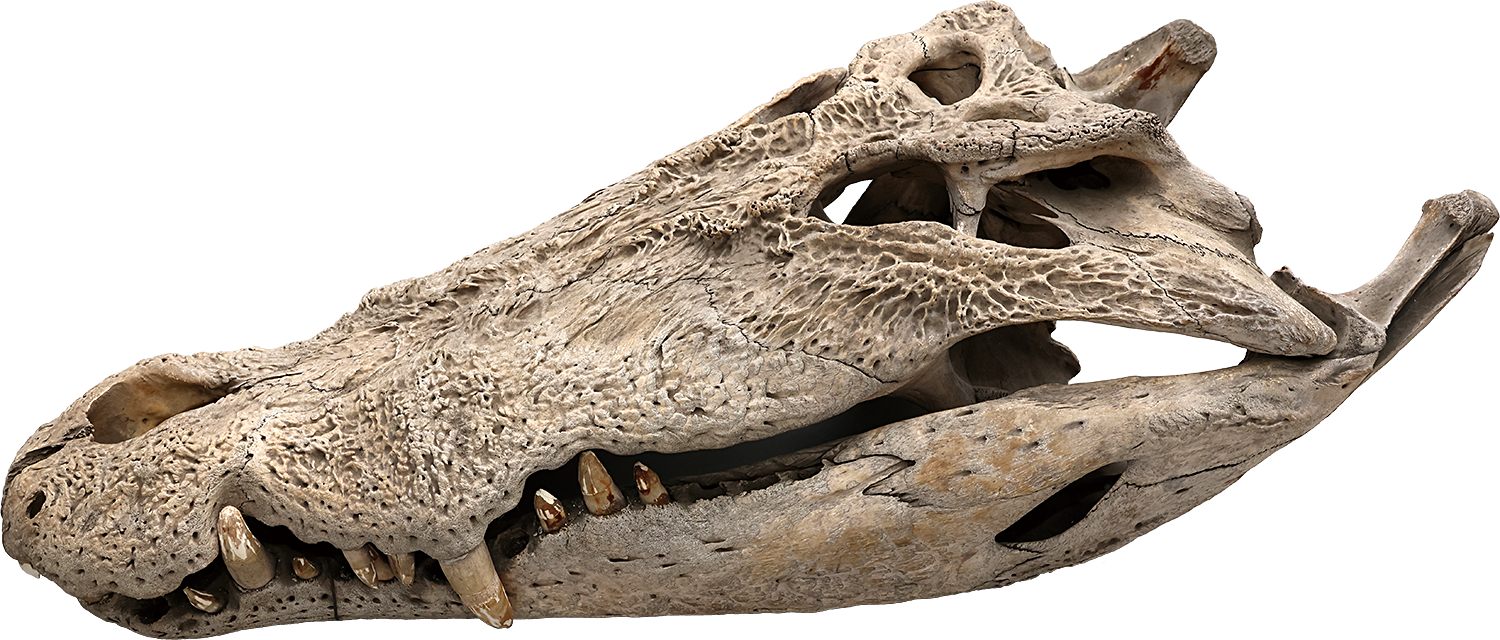 Skull of Saltwater crocodile (National Museum of Nature and Science)
Chapter 3: Crocodylians and Humans
Crocodylians that had survived on the earth from ancient times eventually encountered humans. People feared, respected, utilized, and engaged with them in various ways, viewing them as powerful and sometimes mystical creatures. Although there are no wild
crocodylians in Japan now, their presence can be felt even today based on fossils, legends, and religious beliefs, as well as by very rare castaways. How have humans been dealing with crocodylians and embracing them as cultural components?

Chapter 4: Current Status and Conservation of Crocodylians
As human neighborhoods have expanded, our conflicts with crocodylians have also increased. Removal as threats to humans, overexploitation, and loss of habitat have led many crocodilian species to the brink of extinction. However, they have also contributed
to fortifying human culture and natural resources. How can humans and crocodylians coexist? By examining their current conservation status and efforts toward our co-existence, we herein think of the harmonious future for humans and all wildlife, including
crocodylians.
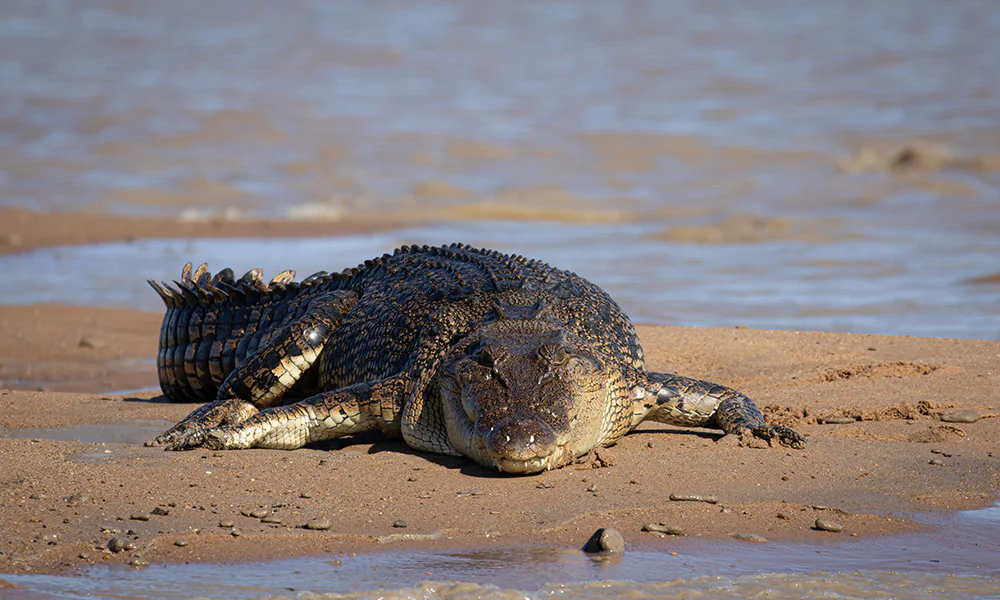 photo by Yusuke Fukuda